
1. INTRODUCTION
Heavy metal contamination of agricultural soils is a major global environmental concern due to its persistence, bioaccumulative nature, and potential risks to ecosystems and human health (Sanad et al., 2025). Numerous studies published in the Archives of Environmental Protection have highlighted the accumulation of heavy metals in soils and their transfer into the food chain (Alengebawy et al., 2021). For example demonstrated that heavy metal concentrations in soils often exceed natural background levels because of anthropogenic activities, while Li et al. (2019) and Hosen et al. (2024) emphasized that metal mobility and leachability directly affect their bioavailability. Studies on soil–plant systems have shown that edible vegetables can accumulate significant amounts of heavy metals, posing potential food safety risks (Khan et al., 2025).
Recent research has further highlighted the importance of bioaccumulation and plant uptake mechanisms (Hasanbegović et al., 2025) as well as the growing concern regarding human health risks associated with heavy metal exposure (Yu et al., 2024). Consequently, heavy metal contamination has become one of the world's most pressing environmental issues (Mustapha et al., 2026).
Heavy metals, unlike organic pollutants, are non-biodegradable and can persist in soils for long periods, accumulating to levels that may threaten human, animal, and plant health. Lead (Pb), cadmium (Cd), nickel (Ni), and chromium (Cr) are among the most frequently studied heavy metals in agricultural systems and originate from both natural geochemical processes and anthropogenic activities (Deng et al., 2025). Although natural sources include parent rock weathering and volcanic activity, industrial emissions, mining, coal combustion, vehicle traffic, and the intensive use of fertilizers and pesticides have become the dominant contributors to soil contamination (Yao et al., 2024). Consequently, agricultural soils located near industrial areas are particularly vulnerable to heavy metal accumulation and associated environmental risks (Hafsi et al., 2024). In addition, waste-derived materials such as coal ash may further influence the mobility and distribution of heavy metals in soil systems (Rosik-Dulewska & Mikszta, 2001). Cadmium is considered one of the most hazardous heavy metals because of its high mobility in soil, efficient plant uptake, and associated human health risks (Rasin et al., 2025). Lead is also a major environmental contaminant owing to its well-documented neurotoxic effects, while excessive concentrations of nickel and chromium may cause adverse physiological effects. Human exposure occurs mainly through the transfer of heavy metals from soil to plants (Thien et al., 2021), a process influenced by metal speciation, bioavailability, plant characteristics, and soil properties such as pH, organic matter content, and cation exchange capacity (Dede et al., 2023; Ševčíková et al., 2025). Leafy vegetables, particularly cabbage (Brassica oleracea L.), readily accumulate heavy metals and are therefore widely used as bioindicator species for assessing soil contamination and soil-to-plant metal transfer (Mourato et al., 2015; Hosen et al., 2024).
In Southeast Europe, especially in Kosovo, historical and ongoing industrial activities have contributed to localized environmental pollution (Zeqiri et al., 2024). The central region of Kosovo, including Drenas, Obiliq, and Fushë Kosovë, is characterized by intensive mining, metallurgical activities, and lignite-based power generation, which are recognized sources of heavy metal contamination (Behrami et al., 2022). These industrial activities release considerable amounts of heavy metals into the environment through solid waste, wastewater, and atmospheric emissions (Behrami & Avdiu, 2023). In contrast, southern Kosovo, particularly the Prizren region, is predominantly agricultural and less industrialized. However, systematic comparative studies evaluating soil contamination and plant uptake between these regions remain limited (Correia & Rasteiro, 2025).
Understanding the spatial distribution of heavy metals and their transfer to edible crops is essential for environmental risk assessment and the development of effective management strategies, particularly in areas affected by historical mining and industrial activities (Vlad et al., 2025; Andráš et al., 2026). Assessing heavy metal concentrations against international food safety standards established by the Food and Agriculture Organization (FAO) and the World Health Organization (WHO) is fundamental for evaluating potential risks to consumers (Tanjil et al., 2024; Duan et al., 2025). Accurate determination of heavy metal concentrations is commonly achieved using atomic absorption spectroscopy (AAS), which provides reliable measurements for environmental monitoring and risk assessment (Behrami et al., 2026; Abdelmonem et al., 2025). Therefore, comprehensive studies integrating soil and plant analyses are needed to better understand contamination patterns and support mitigation strategies (Schirpke et al., 2024).
Accordingly, this study evaluated the concentrations and spatial distribution of Pb, Cd, Ni, and Cr in agricultural soils and cabbage (Brassica oleracea) from the industrialized Prishtina region and the predominantly agricultural Prizren region. The study also assessed soil-to-plant transfer and its potential implications for food safety (Ju et al., 2024), providing information on regional contamination patterns to support environmental monitoring and sustainable risk management (Bi et al., 2025; Behera et al., 2026). Previous studies have documented heavy metal contamination in different agricultural and industrial areas of Kosovo. A nationwide survey by Zogaj et al. demonstrated that agricultural soils frequently contain elevated concentrations of Ni, while increased levels of Pb, Cd, Zn, and Cr were also detected in several locations, with soil properties playing an important role in metal bioavailability (Zogaj et al., 2014).
Studies conducted around the Kosovo power plants also reported elevated concentrations of heavy metals in agricultural soils affected by industrial emissions (Jusufi et al., 2016) whereas more recent investigations confirmed significant contamination in mining and metallurgical areas of Kosovo, particularly for Pb, Cd, Zn, and related potentially toxic elements (Protano et al., 2023; Zeqiri et al., 2024). Despite these findings, comparative studies simultaneously evaluating heavy metal concentrations in agricultural soils and cabbage cultivated in the Prishtina and Prizren regions remain scarce, particularly with respect to soil-to-plant transfer and implications for food safety.
2. MATERIALS AND METHODS
2.1. Study Area
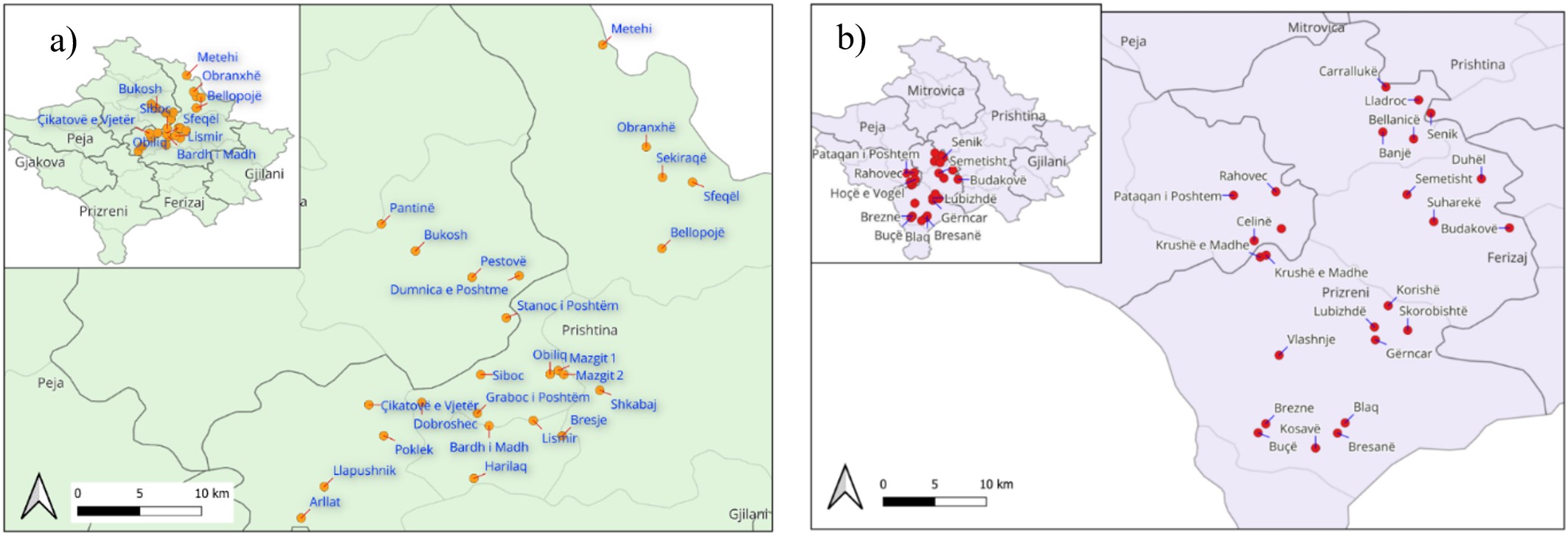
The Prishtina region, which includes the towns of Drenas, Fushë Kosovë, Obiliq, Vushtrri, and Podujevë, and the Prizren region, which includes Dragash, Prizren, Suharekë, Rahovec, and Malishevë, were the two main agricultural regions of Kosovo where the study was carried out. These areas were chosen because of their disparate anthropogenic and environmental features. Industrial activities, such as mining operations, lignite-based power plants, and urban emissions, especially in municipalities like Obiliq and Drenas, have a significant impact on the Prishtina region. The Prizren region, on the other hand, is primarily agricultural and has less industrial pressure, which makes it appropriate for comparing heavy metal contamination under various environmental circumstances. Both areas have a continental climate that supports intensive agricultural production due to its moderate precipitation and temperature fluctuations. Typical agricultural fields where cabbage (Brassica oleracea) is grown for local consumption are represented by the chosen sampling locations. The spatial distribution of the soil and cabbage sampling sites in the Prishtina and Prizren regions is shown in Figure 1a–b. Typical agricultural fields where cabbage (Brassica oleracea L.) is grown for local consumption are represented by the selected sampling locations.
2.2. Sampling procedure
A thorough spatial coverage of the study areas was achieved by collecting paired soil and plant samples from ten municipalities, with five sampling locations per municipality. In total, 50 paired sampling locations were investigated, comprising 25 locations in the Prishtina region and 25 locations in the Prizren region. At each location, one agricultural soil sample and one corresponding cabbage (Brassica oleracea L.) sample were collected, resulting in a total of 50 soil samples and 50 cabbage samples. Soil samples were collected from the topsoil layer (0–30 cm), representing the most biologically active zone for plant root development and nutrient uptake. To ensure representativeness, composite soil samples were prepared by combining several subsamples collected from each sampling plot. Cabbage samples were collected from the same locations as the corresponding soil samples, and only the edible portions were used for subsequent analyses. To minimize contamination during sampling, transportation, and storage, all samples were handled according to standard sampling procedures. Each sample was individually labeled, placed in sterile polyethylene bags, transported to the laboratory, and stored under appropriate conditions until analysis.
2.3. Sample preparation
To get rid of stones and debris, soil samples were homogenized, air-dried at room temperature, and sieved through a 2 mm mesh screen in the lab. Prior to analysis, the prepared samples were kept in hygienic containers. After thoroughly cleaning plant samples (cabbage leaves) with distilled water to get rid of surface impurities, the samples were air-dried and then oven-dried at about 70°C until they reached a consistent weight. After being dried, the plant material was ground into a fine powder in a lab mill and kept in airtight containers.
2.4. Chemical analysis
Heavy metal concentrations (Pb, Cd, Ni, and Cr) in soil and cabbage samples were determined using graphite furnace atomic absorption spectrometry (GFAAS) with an SAA Pro 4250 atomic absorption spectrometer. Prior to analysis, all samples were subjected to acid digestion. Plant samples were thoroughly washed with deionized water to remove surface impurities, oven-dried at 60–70 °C to constant weight, and ground into a homogeneous powder. Soil samples were collected from the 0–15 cm surface layer, air-dried (or oven-dried at 40–60 °C), homogenized, and sieved through a 2-mm mesh before digestion. For acid digestion, approximately 1.0 g of each dried and homogenized sample was accurately weighed into acid-resistant digestion tubes.
Each sample was treated with 9 mL of concentrated HNO₃ (65%), 3 mL of concentrated HCl (37%), and 1 mL of H₂O₂ (30%) to enhance the oxidation of complex sample matrices. Digestion was performed using a DKL heating block digestion system under the following temperature program: (i) gradual heating to 140 °C for 15 min to prevent excessive foaming and acid splashing; (ii) digestion at 200 °C for 60 min; and (iii) for samples exhibiting incomplete mineralization, the temperature was increased to 240 °C for an additional 30 min until complete digestion was achieved. After digestion, the tubes were allowed to cool gradually before opening to minimize acid loss through evaporation. The digests were filtered to remove any insoluble residues and quantitatively transferred into 50 mL volumetric flasks, where the volume was adjusted to 50 mL with deionized water. Finally, 1 mL of 3% HNO₃ was added to each solution to improve analyte stability prior to GFAAS analysis. Instrument calibration was performed using certified multi-element standard solutions for each investigated metal. Analytical quality assurance included reagent blanks, duplicate sample analysis, and certified reference materials to ensure the accuracy, precision, and reliability of the analytical results.
All laboratory determinations were performed in triplicate, and the mean values of the three replicate measurements were used for all statistical analyses.
2.5. Data analysis
Heavy metal concentrations were expressed as mg/kg on a dry-weight basis. Descriptive statistics, including the mean, standard deviation, minimum, maximum, and 95% confidence interval of the mean, were calculated for Pb, Cd, Ni, and Cr concentrations in soil and cabbage samples. The statistical analyses were based on 50 paired sampling locations, comprising 25 locations in the Prishtina region and 25 locations in the Prizren region. At each location, one soil sample and one corresponding cabbage sample were collected.
Pearson’s product–moment correlation analysis was used to evaluate the relationship between heavy metal concentrations in paired soil and cabbage samples. Correlation coefficients were calculated separately for each region and for the complete dataset. One-way analysis of variance (ANOVA) was used to evaluate differences among the five municipalities within each region, separately for soil and cabbage samples. Regional differences between Prishtina and Prizren were evaluated using Welch’s independent-samples t-test because the homogeneity-of-variance assumption was not satisfied for several comparisons. Statistical significance was established at p < 0.05. IBM SPSS Statistics, version 26.0, and Microsoft Excel were used for data processing and statistical analysis. The magnitude of the municipal effect was evaluated using eta squared (η²), where values of approximately 0.01, 0.06, and 0.14 were interpreted as small, medium, and large effect sizes, respectively.
2.6. Assessment of soil–plant transfer
The following formula was used to determine the Bioaccumulation Factor (BAF) in order to assess the movement of heavy metals from soil to plants (Baker, 1981):
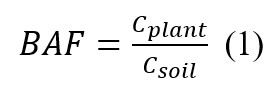
where:
= concentration of metal in plant (mg/kg)
= concentration of metal in soil (mg/kg)
The ability of cabbage to take up specific metals from the soil is revealed by the BAF. Values less than 1 indicate limited uptake, while values greater than 1 indicate high accumulation potential.
2.7. Comparison with standards
The results for Pb, Cd, Ni, and Cr in soil and cabbage (Brassica oleracea) were compared with international guidelines for food safety and soil quality set by the Food and Agriculture Organization (FAO) and the World Health Organization (WHO), as well as the EU standards for heavy metals in food.
The measured concentrations for soils were compared to widely recognized guideline limits for agricultural soils, and the results for cabbage were compared to the highest levels that are allowed for edible leafy vegetables. In particular, this comparison was used to determine the possible contamination status of the areas under study and to assess potential risks related to the consumption of cabbage grown in the regions of Prishtina and Prizren. Ni and Cr were assessed based on their phytotoxicity thresholds and environmental accumulation behavior, while Pb and Cd were given special attention due to their high toxicity and importance in food safety. The comparison's findings serve as a foundation for locating regions with high environmental pressure and possible hazards to human health associated with exposure to heavy metals through the food chain.
3. RESULTS AND DISCUSSION
3.1. Spatial distribution of heavy metals in soil and cabbage in the Prishtina region
Five municipalities in the Prishtina region—Drenas, Fushë Kosovë, Obiliq, Vushtrri, and Podujevë—were used to assess the spatial distribution of heavy metals in agricultural soils and their accumulation in cabbage (Brassica oleracea).
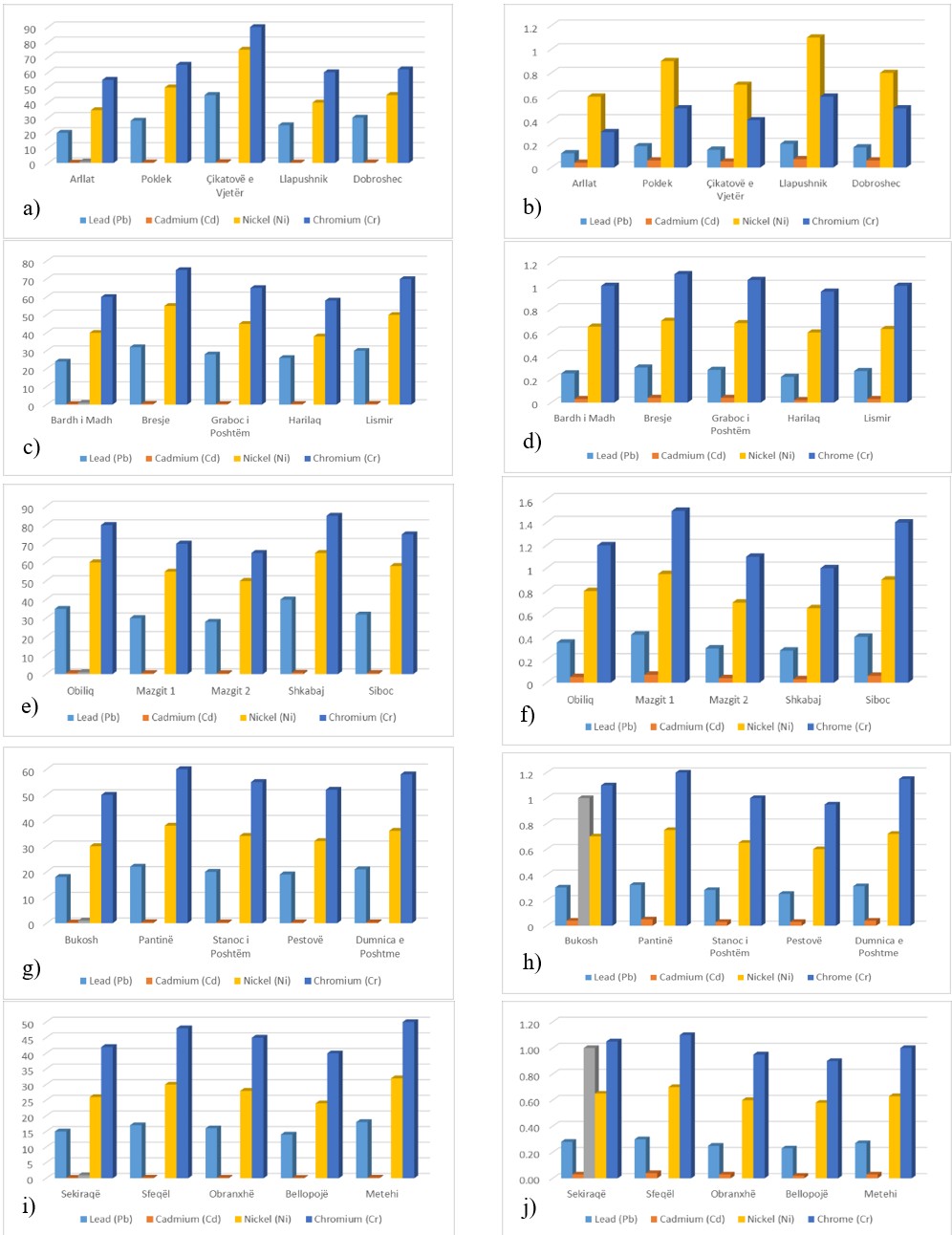
Figures 2a–j show the concentrations of Pb, Cd, Ni, and Cr in both soil and plant samples, emphasizing the variation between locations and the impact of anthropogenic activities. Overall, the graphical results show a distinct pattern of heavy metal distribution heterogeneity, with higher concentrations found in municipalities with high levels of industrial activity. Particularly, contamination levels are higher in places like Obiliq and Drenas, whereas more remote municipalities like Podujevë have comparatively lower concentrations. This variation reflects variations in local sources of pollution, such as emissions from mining operations, urban activities, and lignite-based power plants.
Additionally, a direct correlation between environmental contamination and plant uptake is shown by the comparison of soil and cabbage data. Lead shows more restricted uptake because of its lower bioavailability in soil systems, whereas cadmium shows greater mobility and transfer potential. The degree of metal accumulation in cabbage varies depending on the element. These patterns offer crucial information about how heavy metals behave in soil-plant systems and how they might affect food safety.
Figure 2a illustrates a heterogeneous spatial distribution of Pb, Cd, Ni, and Cr concentrations in agricultural soils from the Drenas municipality, with the highest values recorded at the Çikatovë e Vjetër sampling site (Pb: 45 mg/kg, Cd: 0.60 mg/kg, Ni: 75 mg/kg, and Cr: 90 mg/kg). The marked spatial variability indicates localized contamination hotspots that are most likely associated with nearby mining activities, lignite exploitation, and industrial emissions. This interpretation is further supported by the significant spatial differences observed among sampling locations (ANOVA, p < 0.05), suggesting that anthropogenic inputs rather than natural geological variability are the dominant factors controlling metal distribution. The corresponding cabbage samples (Figure 2b) generally reflected the elevated soil contamination, although metal uptake differed considerably among individual elements. Nickel and chromium exhibited the highest concentrations in cabbage, reaching 1.10 and 0.60 mg/kg, respectively, whereas cadmium, despite its relatively low concentration in soil, showed comparatively efficient transfer to plant tissues (up to 0.07 mg/kg). This behavior is consistent with the greater mobility and bioavailability of Cd in agricultural soils, particularly under conditions that favor metal solubility, such as lower soil pH and reduced adsorption onto soil constituents.
In contrast, lead accumulation remained relatively limited (0.12–0.20 mg/kg), reflecting its strong adsorption to soil minerals and organic matter, which substantially restricts root uptake despite elevated soil concentrations. Overall, the results indicate that soil contamination alone does not determine plant accumulation; rather, metal-specific physicochemical properties, including mobility, bioavailability, and soil retention mechanisms, play a crucial role in regulating soil-to-plant transfer. Consequently, the Drenas municipality represents one of the principal contamination hotspots within the Prishtina region, where industrial activities appear to increase both environmental metal loads and the potential for transfer into the agricultural food chain.
Figure 2c shows moderate to high concentrations of heavy metals in agricultural soils from the Fushë Kosovë municipality, with Ni and Cr reaching maximum values of 55 and 75 mg/kg, respectively, while Cd concentrations ranged from 0.35 to 0.50 mg/kg. The observed spatial variability and statistically significant differences among sampling locations (ANOVA, p < 0.05) suggest the influence of localized anthropogenic sources, including industrial activities, urban emissions, and traffic-related deposition, which are characteristic of this municipality.
The corresponding cabbage samples (Figure 2d) exhibited the highest Cr concentrations among all investigated municipalities, reaching 1.10 mg/kg, whereas Ni and Pb also showed consistent accumulation (0.60–0.70 and 0.22–0.30 mg/kg, respectively). In contrast, Cd concentrations in cabbage remained comparatively low (0.02–0.04 mg/kg) despite moderate soil concentrations. This pattern indicates that total soil metal concentrations alone do not determine plant uptake. Instead, soil physicochemical properties, including pH, organic matter content, cation exchange capacity, and metal speciation, are likely to regulate metal mobility and bioavailability. The relatively high Cr accumulation may reflect greater metal availability under local environmental conditions or enhanced uptake by cabbage, whereas the lower Cd transfer suggests stronger retention within the soil matrix or physiological regulation of Cd uptake by the plant. Overall, these findings demonstrate that heavy metal accumulation in cabbage is governed by the combined influence of anthropogenic contamination and soil–plant interactions rather than by total soil concentrations alone, highlighting the importance of considering bioavailability when assessing metal transfer in agricultural ecosystems.
Figure 2e identifies Obiliq as the municipality with the highest overall heavy metal burden within the Prishtina region. Soil concentrations reached maximum values of 0.70 mg/kg for Cd, 65 mg/kg for Ni, and 85 mg/kg for Cr, while statistically significant spatial differences among sampling locations (ANOVA, p < 0.05) indicate localized contamination associated with intensive anthropogenic activities. These elevated concentrations are consistent with the long-term influence of lignite-fired power plants, coal ash deposition, and other industrial emissions that characterize the Obiliq area.
The corresponding cabbage samples (Figure 2f) exhibited the highest accumulation of Pb (up to 0.42 mg/kg) and Cr (up to 1.50 mg/kg) among all investigated municipalities, whereas Cd reached a maximum concentration of 0.07 mg/kg. The elevated concentrations observed in plant tissues suggest that both soil contamination and atmospheric deposition may contribute to heavy metal accumulation in cabbage cultivated near industrial sources. However, the magnitude of plant uptake is also influenced by metal-specific mobility and soil physicochemical properties, including pH, organic matter content, cation exchange capacity, and adsorption processes. Chromium exhibited the greatest accumulation in cabbage, whereas Cd maintained comparatively high transfer efficiency despite its lower absolute concentrations, reflecting its well-documented mobility in agricultural soils. Overall, the consistency between elevated soil concentrations and increased metal accumulation in cabbage indicates that anthropogenic activities substantially influence heavy metal transfer within the soil–plant system. Nevertheless, the variability observed among individual metals demonstrates that total soil concentrations alone cannot fully explain plant uptake, highlighting the importance of bioavailability and soil retention mechanisms in regulating metal accumulation.
Figure 2g shows comparatively lower heavy metal concentrations in agricultural soils from the Vushtrri municipality than those observed in Drenas and Obiliq. Soil concentrations ranged from 18–22 mg/kg for Pb, 0.25–0.35 mg/kg for Cd, 30–38 mg/kg for Ni, and 50–60 mg/kg for Cr, indicating a moderate degree of anthropogenic influence. The statistically significant differences among sampling locations (ANOVA, p < 0.05) further suggest localized variability in contamination intensity rather than a uniform distribution of heavy metals.
The corresponding cabbage samples (Figure 2h) exhibited moderate accumulation of Ni (up to 0.75 mg/kg) and Cr (up to 1.20 mg/kg), whereas Cd concentrations remained relatively low (0.03–0.05 mg/kg). This pattern suggests that metal accumulation in cabbage was not directly proportional to total soil concentrations but was additionally influenced by metal-specific mobility and soil physicochemical properties. The relatively limited transfer of Cd may reflect stronger adsorption to soil constituents or reduced bioavailability under local soil conditions, whereas the consistent accumulation of Ni and Cr indicates greater availability of these elements for plant uptake. Overall, the relatively balanced relationship between soil and cabbage concentrations suggests lower contamination pressure than in the more industrialized municipalities of Drenas and Obiliq. Nevertheless, the observed accumulation of Ni and Cr demonstrates that even moderate soil contamination can result in measurable metal uptake by edible crops, emphasizing the importance of continued environmental monitoring in agricultural areas.
Figure 2i shows that Podujevë exhibited the lowest heavy metal concentrations among the investigated municipalities in the Prishtina region. Soil concentrations ranged from 14–18 mg/kg for Pb, 0.16–0.24 mg/kg for Cd, 24–32 mg/kg for Ni, and 40–50 mg/kg for Cr, indicating comparatively lower anthropogenic influence than that observed in the industrialized municipalities of Drenas and Obiliq. The statistically significant spatial differences among sampling locations (ANOVA, p < 0.05) further demonstrate that contamination intensity varied across the municipality despite the overall lower concentrations. The corresponding cabbage samples (Figure 2j) also exhibited comparatively lower metal accumulation, with Ni ranging from 0.58 to 0.70 mg/kg and Cr from 0.90 to 1.10 mg/kg, whereas Cd concentrations remained between 0.02 and 0.04 mg/kg.
The relatively limited accumulation of Cd is consistent with its lower soil concentrations at these sampling sites, while the moderate uptake of Ni and Cr suggests that plant accumulation is influenced not only by total soil concentrations but also by soil physicochemical characteristics, including pH, organic matter content, cation exchange capacity, and metal speciation, which regulate metal bioavailability. Overall, the spatial distribution of heavy metals within the Prishtina region followed a clear contamination gradient (Obiliq ≈ Drenas > Fushë Kosovë > Vushtrri > Podujevë), reflecting differences in industrial activity and anthropogenic pressure.
Although the Prishtina region generally exhibited higher concentrations and greater bioaccumulation than the Prizren region, the statistical analyses demonstrated that soil-to-plant transfer varied among individual metals, indicating that bioaccumulation is governed by both environmental conditions and metal-specific physicochemical properties rather than by total soil concentrations alone. The comparatively higher accumulation of Cd and Cr in the more industrialized municipalities emphasizes the importance of continuous environmental monitoring and further investigation of the factors controlling heavy metal mobility in agricultural soils.
3.2. Spatial distribution of heavy metals in soil and cabbage in the Prizren region
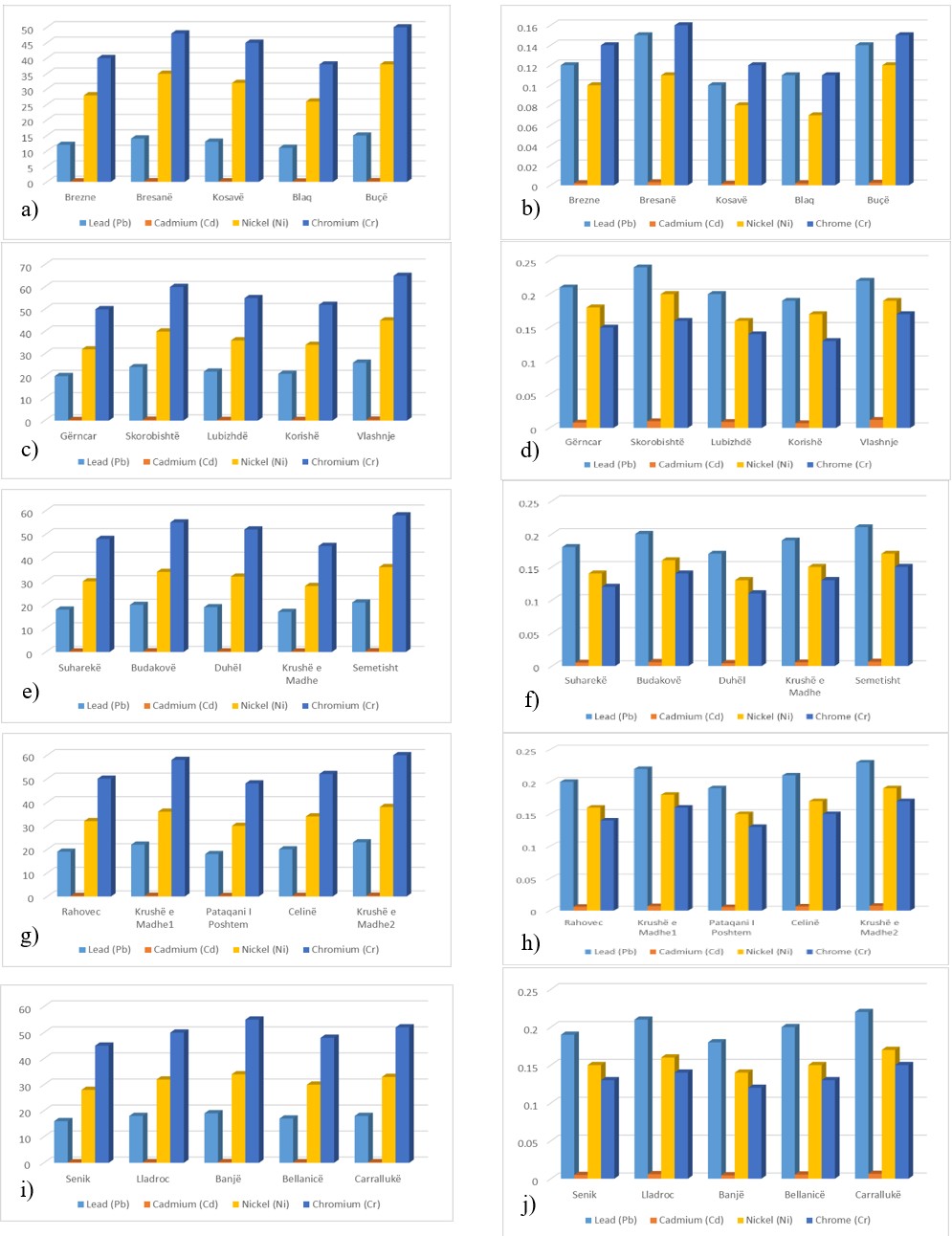
Five municipalities in the Prizren region—Dragash, Prizren, Suharekë, Rahovec, and Malishevë—were used to assess the spatial distribution of heavy metals in agricultural soils and their accumulation in cabbage (Brassica oleracea). Figures 3a–j show the concentrations of Pb, Cd, Ni, and Cr in soil and plant samples, indicating significant spatial variability and variations in potential anthropogenic influence across the studied areas. Overall, the graphical results show that the Prizren region's soils have a generally moderate level of heavy metal presence, with different spatial patterns between municipalities. Dragash consistently has the lowest concentrations, indicating a mostly natural geochemical background with little human influence. Prizren and Rahovec, on the other hand, show somewhat higher levels, indicating localized anthropogenic contributions that are probably related to urban activities, traffic emissions, and agricultural inputs. While staying within moderate contamination ranges, Suharekë and Malishevë exhibit intermediate values, suggesting a combination of anthropogenic and natural influences. Increased soil concentrations are typically followed by higher uptake in plant tissues, as shown by the comparison of soil and cabbage data. Nevertheless, the amount of accumulation varies according to the metal. Although its total concentrations in cabbage are still quite low, cadmium exhibits comparatively greater mobility than other elements. While nickel and chromium show consistent but controlled uptake across all municipalities, lead shows limited transfer from soil to plant, reflecting its low bioavailability. These findings imply that, despite localized increases in heavy metal concentrations in some parts of the Prizren region, the overall level of contamination is still moderate and does not point to serious environmental pollution. The observed patterns highlight the impact of both natural geological conditions and human activity on the distribution of heavy metals in agricultural ecosystems and offer significant insights into soil–plant transfer mechanisms.
Figure 3a shows that Dragash exhibited the lowest heavy metal concentrations among all investigated municipalities. Soil concentrations ranged from 11–15 mg/kg for Pb, 0.10–0.20 mg/kg for Cd, 26–38 mg/kg for Ni, and 38–50 mg/kg for Cr, indicating comparatively low contamination levels and limited anthropogenic influence. The relatively small variability among sampling locations further suggests that metal concentrations are predominantly controlled by natural geochemical conditions rather than localized industrial sources.
The corresponding cabbage samples (Figure 3b) also exhibited the lowest heavy metal concentrations observed in this study. Cadmium concentrations remained particularly low (0.0015–0.003 mg/kg), while Ni and Cr ranged from 0.07–0.12 mg/kg and 0.11–0.16 mg/kg, respectively. Lead concentrations were similarly low (0.10–0.15 mg/kg), indicating limited accumulation in edible plant tissues. These results suggest reduced metal bioavailability under the prevailing environmental conditions, although plant uptake is also influenced by soil physicochemical properties such as pH, organic matter content, cation exchange capacity, and metal speciation. The consistently low concentrations observed in both soil and cabbage, together with the significant positive soil-to-plant correlations identified for the Prizren region, indicate that metal transfer largely reflected the relatively low levels of soil contamination rather than enhanced bioavailability. Consequently, Dragash can be considered a regional reference area characterized by low anthropogenic pressure and comparatively stable environmental conditions, providing a useful baseline for comparison with the more industrialized municipalities of the Prishtina region.
Figure 3c shows moderate heavy metal concentrations in agricultural soils from the Prizren municipality, with maximum values of 26 mg/kg for Pb, 0.40 mg/kg for Cd, 45 mg/kg for Ni, and 65 mg/kg for Cr. Compared with Dragash, the slightly elevated concentrations suggest localized anthropogenic inputs associated with urban development, road traffic, and other municipal activities. The statistically significant differences among sampling locations (ANOVA, p < 0.05) further indicate spatial variability in contamination intensity within the municipality. The corresponding cabbage samples (Figure 3d) exhibited moderate accumulation of Pb (0.19–0.24 mg/kg), Cd (0.007–0.012 mg/kg), Ni (0.16–0.20 mg/kg), and Cr (0.13–0.17 mg/kg). Although metal concentrations in cabbage were higher than those observed in Dragash, accumulation remained relatively limited, indicating moderate bioavailability under the prevailing environmental conditions. The observed uptake patterns are likely influenced not only by total soil concentrations but also by soil physicochemical characteristics, including pH, organic matter content, cation exchange capacity, and metal speciation, which regulate metal mobility and root absorption. Overall, the consistent increase in metal concentrations from soil to cabbage, together with the significant positive soil-to-plant correlations identified for the Prizren region, indicates that plant uptake closely reflected the spatial distribution of heavy metals in soil. Nevertheless, the relatively low BAF values demonstrate that cabbage accumulated only a small fraction of the total metal content, confirming limited soil-to-plant transfer under the investigated field conditions.
Figure 3e shows moderate heavy metal concentrations in agricultural soils from the Suharekë municipality, with Pb ranging from 17 to 21 mg/kg, Cd from 0.20 to 0.30 mg/kg, Ni from 28 to 36 mg/kg, and Cr from 45 to 58 mg/kg. Although slightly higher than those observed in Dragash, these concentrations remain considerably lower than those recorded in the industrially influenced municipalities of the Prishtina region. The statistically significant differences among sampling locations (ANOVA, p < 0.05) indicate moderate spatial variability, suggesting that both natural geochemical characteristics and low-intensity anthropogenic activities contribute to the observed metal distribution.
The corresponding cabbage samples (Figure 3f) exhibited moderate accumulation of all investigated metals. Cadmium concentrations remained low (0.0045–0.0065 mg/kg), whereas Ni (0.13–0.17 mg/kg) and Cr (0.11–0.15 mg/kg) showed consistent but limited uptake. Lead concentrations (0.17–0.21 mg/kg) were comparable to those observed in the Prizren municipality. These uptake patterns suggest that the relatively low bioavailability of heavy metals, together with soil physicochemical characteristics such as pH, organic matter content, cation exchange capacity, and metal speciation, likely limited the transfer of metals from soil to cabbage. Overall, the absence of pronounced contamination hotspots and the relatively low BAF values indicate limited soil-to-plant transfer under the prevailing field conditions. Furthermore, the significant positive correlations observed for the Prizren region suggest that variations in cabbage metal concentrations generally reflected differences in soil contamination levels, although the magnitude of plant uptake remained controlled by metal-specific mobility and soil retention processes.
Figure 3g shows moderate heavy metal concentrations in agricultural soils from the Rahovec municipality, with Pb ranging from 18 to 23 mg/kg, Cd from 0.22 to 0.32 mg/kg, Ni from 30 to 38 mg/kg, and Cr from 48 to 60 mg/kg. Although these concentrations were slightly higher than those observed in Suharekë, they remained substantially lower than those recorded in the industrially influenced municipalities of the Prishtina region. The statistically significant differences among sampling locations (ANOVA, p < 0.05) indicate moderate spatial variability, reflecting the combined influence of local agricultural practices and relatively low anthropogenic inputs. The corresponding cabbage samples (Figure 3h) exhibited moderate accumulation of all investigated metals. Cadmium concentrations remained low (0.0050–0.0075 mg/kg), whereas Ni (0.15–0.19 mg/kg) and Cr (0.13–0.17 mg/kg) showed consistent but limited uptake. Lead concentrations varied within a narrow range (0.19–0.23 mg/kg), indicating relatively stable accumulation among sampling sites. These findings suggest that heavy metal uptake was regulated not only by total soil concentrations but also by soil physicochemical characteristics, including pH, organic matter content, cation exchange capacity, and metal speciation, which strongly influence metal mobility and bioavailability. Overall, the moderate soil contamination and relatively low BAF values indicate limited soil-to-plant transfer under the prevailing field conditions. Furthermore, the significant positive correlations observed for the Prizren region support the conclusion that variations in cabbage metal concentrations generally reflected differences in soil contamination, while the magnitude of accumulation remained controlled by the physicochemical behavior of individual metals and their interactions with the soil matrix. Figure 3i shows comparatively low to moderate heavy metal concentrations in agricultural soils from the Malishevë municipality, with Pb ranging from 16 to 19 mg/kg, Cd from 0.18 to 0.25 mg/kg, Ni from 28 to 34 mg/kg, and Cr from 45 to 55 mg/kg. These concentrations are comparable to those observed in the other municipalities of the Prizren region and remain substantially lower than those recorded in the industrially influenced Prishtina region.
The statistically significant differences among sampling locations (ANOVA, p < 0.05) indicate moderate spatial variability, reflecting predominantly natural geochemical characteristics with limited anthropogenic influence. The corresponding cabbage samples (Figure 3j) also exhibited relatively low metal accumulation, with Pb ranging from 0.18 to 0.22 mg/kg, Cd from 0.0045 to 0.0065 mg/kg, Ni from 0.14 to 0.17 mg/kg, and Cr from 0.12 to 0.15 mg/kg. The consistently low Cd concentrations, despite its presence in soil, suggest reduced bioavailability under the prevailing environmental conditions, while the limited accumulation of all investigated metals further supports the low BAF values observed throughout the Prizren region. As in the other municipalities, soil physicochemical characteristics, including pH, organic matter content, cation exchange capacity, and metal speciation, are likely to have contributed to the limited transfer of heavy metals from soil to cabbage.
Overall, the spatial distribution of heavy metals within the Prizren region was characterized by relatively low concentrations, limited variability among municipalities, and consistently low bioaccumulation factors. Statistical analyses demonstrated significant positive soil-to-plant correlations, indicating that variations in cabbage metal concentrations generally reflected differences in soil contamination levels, although the overall transfer remained limited. Dragash consistently exhibited the lowest concentrations of all investigated metals, whereas Prizren and Rahovec showed slightly higher values, reflecting localized anthropogenic influences. In comparison with the Prishtina region, the Prizren region exhibited lower contamination levels and reduced bioaccumulation, emphasizing the importance of regional land use, industrial activities, and environmental conditions in controlling heavy metal distribution and transfer within agricultural ecosystems.
3.3. Descriptive Statistical Analysis of Heavy Metal Concentrations
To provide an overall quantitative overview of heavy metal contamination in the investigated regions, descriptive statistical analysis was performed for Pb, Cd, Ni, and Cr concentrations measured in agricultural soils and cabbage (Brassica oleracea L.). The calculated parameters included the mean, standard deviation (SD), minimum and maximum values, and the 95% confidence interval (95% CI) for each metal in both environmental matrices. These statistics provide information on the central tendency, variability, and distribution of heavy metal concentrations and establish the basis for the subsequent correlation and comparative statistical analyses between the Prishtina and Prizren regions.
Table 1 presents the descriptive statistics of Pb, Cd, Ni, and Cr concentrations in agricultural soils and cabbage collected from the Prishtina and Prizren regions. Overall, the Prishtina region exhibited consistently higher mean concentrations of all investigated heavy metals in both soil and cabbage compared with the Prizren region, reflecting the stronger anthropogenic pressure associated with mining, lignite-based power generation, and industrial activities.
|
Table 1. Descriptive statistics (mean ± SD, minimum, maximum and 95% confidence interval) of Pb, Cd, Ni and Cr concentrations in agricultural soils and cabbage collected from the Prishtina and Prizren regions. |
|||||||||
|
Region |
Matrix |
Metal |
n |
Mean |
SD |
Min |
Max |
95% CI lower |
95% CI upper |
|
Prishtina |
Cabbage |
Pb |
25 |
0.2672 |
0.0704 |
0.1200 |
0.4200 |
0.2381 |
0.2963 |
|
Prishtina |
Cabbage |
Cd |
25 |
0.0412 |
0.0142 |
0.0200 |
0.0700 |
0.0353 |
0.0471 |
|
Prishtina |
Cabbage |
Ni |
25 |
0.7176 |
0.1278 |
0.5800 |
1.1000 |
0.6648 |
0.7704 |
|
Prishtina |
Cabbage |
Cr |
25 |
0.9600 |
0.2919 |
0.3000 |
1.5000 |
0.8395 |
1.0805 |
|
Prishtina |
Soil |
Pb |
25 |
25.3200 |
7.9042 |
14.0000 |
45.0000 |
22.0573 |
28.5827 |
|
Prishtina |
Soil |
Cd |
25 |
0.3712 |
0.1435 |
0.1600 |
0.7000 |
0.3120 |
0.4304 |
|
Prishtina |
Soil |
Ni |
25 |
42.8400 |
13.1994 |
24.0000 |
75.0000 |
37.3916 |
48.2884 |
|
Prishtina |
Soil |
Cr |
25 |
61.4000 |
12.9422 |
40.0000 |
90.0000 |
56.0577 |
66.7423 |
|
Prizren |
Cabbage |
Pb |
25 |
0.1872 |
0.0369 |
0.1000 |
0.2400 |
0.1720 |
0.2024 |
|
Prizren |
Cabbage |
Cd |
25 |
0.0058 |
0.0025 |
0.0015 |
0.0120 |
0.0047 |
0.0068 |
|
Prizren |
Cabbage |
Ni |
25 |
0.1500 |
0.0332 |
0.0700 |
0.2000 |
0.1363 |
0.1637 |
|
Prizren |
Cabbage |
Cr |
25 |
0.1400 |
0.0171 |
0.1100 |
0.1700 |
0.1330 |
0.1470 |
|
Prizren |
Soil |
Pb |
25 |
18.5200 |
3.6756 |
11.0000 |
26.0000 |
17.0028 |
20.0372 |
|
Prizren |
Soil |
Cd |
25 |
0.2400 |
0.0690 |
0.1000 |
0.4000 |
0.2115 |
0.2685 |
|
Prizren |
Soil |
Ni |
25 |
33.3200 |
4.2399 |
26.0000 |
45.0000 |
31.5699 |
35.0701 |
|
Prizren |
Soil |
Cr |
25 |
51.1600 |
6.2761 |
38.0000 |
65.0000 |
48.5693 |
53.7507 |
The largest regional differences were observed for Cd and Cr, whereas Pb and Ni also showed substantially elevated concentrations in the Prishtina region. The standard deviation values indicate greater spatial variability in the Prishtina region, suggesting heterogeneous contamination patterns among sampling locations. In contrast, the Prizren region showed lower standard deviations and narrower 95% confidence intervals, indicating a more homogeneous distribution of heavy metal concentrations. Similarly, the minimum and maximum values confirmed that the highest concentrations were recorded in industrially influenced municipalities of the Prishtina region, whereas the lowest values occurred predominantly in the agricultural municipalities of the Prizren region. Overall, the descriptive statistics demonstrate clear regional differences in heavy metal contamination and indicate that agricultural soils in the Prishtina region constitute a greater source of metal accumulation in cabbage than those in the Prizren region. These findings provide the statistical basis for the subsequent comparative and correlation analyses.
Table 2 presents the Pearson correlation coefficients between paired soil and cabbage concentrations of Pb, Cd, Ni, and Cr in the Prishtina and Prizren regions, as well as for the combined dataset. The results indicate that the strength of the soil–plant relationship varied considerably between regions and among individual metals. In the Prishtina region, weak positive correlations were observed for Cd (r = 0.338) and Ni (r = 0.359), whereas Pb (r = 0.026) and Cr (r = 0.006) showed virtually no correlation between soil and cabbage concentrations. None of these relationships were statistically significant (p > 0.05), indicating that soil metal concentrations alone could not adequately explain the variability of metal accumulation in cabbage. These findings suggest that additional factors, such as soil physicochemical properties, atmospheric deposition, and plant physiological characteristics, may substantially influence metal uptake. In contrast, the Prizren region exhibited strong and statistically significant positive correlations for Pb (r = 0.862), Cd (r = 0.900), Cr (r = 0.641), and a moderate positive correlation for Ni (r = 0.563) (all p < 0.01). The relatively narrow 95% confidence intervals further support the robustness of these relationships. These results indicate that, under the comparatively homogeneous environmental conditions of the Prizren region, soil heavy metal concentrations were strongly associated with their accumulation in cabbage. When all 50 paired sampling locations were considered together, significant positive correlations were obtained for all investigated metals, with Cd showing the strongest association (r = 0.600), followed by Ni (r = 0.526), Pb (r = 0.422), and Cr (r = 0.418). These findings demonstrate that soil contamination contributes to heavy metal accumulation in cabbage; however, the magnitude of this relationship is region-specific and depends on the individual behavior of each metal.
|
Table 2. Pearson correlations between paired soil and cabbage concentrations. |
||||||
|
Region |
Metal |
n paired locations |
Pearson r |
p-value |
95% CI lower |
95% CI upper |
|
Prishtina |
Pb |
25 |
0.0256 |
0.9032 |
-0.3733 |
0.4166 |
|
Prishtina |
Cd |
25 |
0.3378 |
0.0987 |
-0.0662 |
0.6466 |
|
Prishtina |
Ni |
25 |
0.3593 |
0.0778 |
-0.0418 |
0.6606 |
|
Prishtina |
Cr |
25 |
0.0055 |
0.9791 |
-0.3905 |
0.3998 |
|
Prizren |
Pb |
25 |
0.8618 |
0.0000 |
0.7077 |
0.9377 |
|
Prizren |
Cd |
25 |
0.9002 |
0.0000 |
0.7839 |
0.9555 |
|
Prizren |
Ni |
25 |
0.5630 |
0.0034 |
0.2159 |
0.7838 |
|
Prizren |
Cr |
25 |
0.6414 |
0.0005 |
0.3299 |
0.8270 |
|
Combined |
Pb |
50 |
0.4218 |
0.0023 |
0.1626 |
0.6266 |
|
Combined |
Cd |
50 |
0.6002 |
0.0000 |
0.3864 |
0.7528 |
|
Combined |
Ni |
50 |
0.5255 |
0.0001 |
0.2895 |
0.7013 |
|
Combined |
Cr |
50 |
0.4181 |
0.0025 |
0.1582 |
0.6239 |
Table 3 summarizes the one-way ANOVA results evaluating differences in heavy metal concentrations among municipalities within the Prishtina and Prizren regions. Overall, statistically significant spatial variation was observed for most investigated metals, confirming that heavy metal distribution was not homogeneous across the study area. In the Prishtina region, significant differences among municipalities were identified for all investigated metals in both soil and cabbage samples (p < 0.05). The largest effect sizes were observed for Cd in soil (η² = 0.729) and Cr in cabbage (η² = 0.851), indicating that municipality accounted for a substantial proportion of the observed variability in heavy metal concentrations. These findings are consistent with the heterogeneous distribution of industrial activities, particularly mining operations and lignite-fired power plants, across the Prishtina region. In the Prizren region, significant differences among municipalities were also observed for most heavy metals. In soil, Pb, Cd, and Cr differed significantly among municipalities (p < 0.05), whereas Ni showed no statistically significant variation (F = 2.022, p = 0.130). Similarly, cabbage samples exhibited significant differences for Pb, Cd, and Ni, while Cr concentrations did not vary significantly among municipalities (F = 1.679, p = 0.194). These results suggest a more homogeneous spatial distribution of Ni in soil and Cr in cabbage within the Prizren region compared with the Prishtina region. Overall, the ANOVA results demonstrate that spatial location significantly influenced heavy metal concentrations, although the magnitude of this effect differed among metals and between regions. The larger effect sizes observed in the Prishtina region indicate greater spatial heterogeneity, likely reflecting stronger anthropogenic influences associated with industrial activities.
|
Table 3. One-way ANOVA among municipalities within each region. |
|||||
|
Region |
Matrix |
Metal |
F(4,20) |
p-value |
η² |
|
Prishtina |
Soil |
Pb |
9.9585 |
0.0001 |
0.6657 |
|
Prishtina |
Soil |
Cd |
13.4612 |
0.0000 |
0.7292 |
|
Prishtina |
Soil |
Ni |
10.2338 |
0.0001 |
0.6718 |
|
Prishtina |
Soil |
Cr |
10.0856 |
0.0001 |
0.6686 |
|
Prishtina |
Cabbage |
Pb |
16.0524 |
0.0000 |
0.7625 |
|
Prishtina |
Cabbage |
Cd |
5.6667 |
0.0032 |
0.5313 |
|
Prishtina |
Cabbage |
Ni |
3.1018 |
0.0387 |
0.3829 |
|
Prishtina |
Cabbage |
Cr |
28.5246 |
0.0000 |
0.8509 |
|
Prizren |
Soil |
Pb |
19.7134 |
0.0000 |
0.7977 |
|
Prizren |
Soil |
Cd |
10.2186 |
0.0001 |
0.6715 |
|
Prizren |
Soil |
Ni |
2.0221 |
0.1300 |
0.2880 |
|
Prizren |
Soil |
Cr |
3.9455 |
0.0161 |
0.4411 |
|
Prizren |
Cabbage |
Pb |
21.3742 |
0.0000 |
0.8104 |
|
Prizren |
Cabbage |
Cd |
26.6822 |
0.0000 |
0.8422 |
|
Prizren |
Cabbage |
Ni |
20.1908 |
0.0000 |
0.8015 |
|
Prizren |
Cabbage |
Cr |
1.6794 |
0.1942 |
0.2514 |
Table 4 presents the results of Welch’s independent-samples t-test comparing heavy metal concentrations between the Prishtina and Prizren regions. Significant regional differences were observed for all investigated metals in both soil and cabbage samples (p < 0.01), confirming that the two regions differ markedly in their contamination status. In soil samples, mean concentrations of Pb, Cd, Ni, and Cr were consistently higher in the Prishtina region than in the Prizren region. The observed mean differences ranged from 0.131 mg/kg for Cd to 10.240 mg/kg for Cr, with all comparisons being statistically significant (p ≤ 0.0018). The corresponding Hedges’ g values (0.956–1.147) indicate large effect sizes, demonstrating that these regional differences are not only statistically significant but also environmentally meaningful. Even greater differences were observed in cabbage samples, where all heavy metals exhibited significantly higher concentrations in the Prishtina region (p < 0.001). The largest differences were found for Ni (mean difference = 0.568 mg/kg) and Cr (mean difference = 0.820 mg/kg), with exceptionally large effect sizes (Hedges’ g = 5.982 and 3.904, respectively). These findings indicate that regional differences in environmental contamination are strongly reflected in metal accumulation by cabbage. The significant Levene’s test results for most comparisons (p < 0.05) indicate unequal variances between the two regions, supporting the use of Welch’s t-test rather than the conventional Student’s t-test. Furthermore, the 95% confidence intervals for all mean differences did not include zero, providing additional evidence that the observed regional differences are statistically robust. Overall, these results demonstrate that agricultural soils and cabbage cultivated in the Prishtina region contain significantly higher concentrations of heavy metals than those from the Prizren region, reflecting the greater influence of mining, lignite-based power generation, and other industrial activities in central Kosovo.
|
Table 4. Welch’s independent-samples t-test comparing heavy metal concentrations in agricultural soils and cabbage between the Prishtina and Prizren regions. |
||||||||||||
|
Matrix |
Metal |
Mean Prishtina |
Mean Prizren |
Mean difference |
t |
Welch df |
p-value |
95% CI lower |
95% CI upper |
Hedges' g |
Levene F |
Levene p |
|
Soil |
Pb |
25.3200 |
18.5200 |
6.8000 |
3.9004 |
33.9159 |
0.0004 |
3.2566 |
10.3434 |
1.0859 |
12.7059 |
0.0008 |
|
Soil |
Cd |
0.3712 |
0.2400 |
0.1312 |
4.1193 |
34.5246 |
0.0002 |
0.0665 |
0.1959 |
1.1468 |
9.5232 |
0.0034 |
|
Soil |
Ni |
42.8400 |
33.3200 |
9.5200 |
3.4334 |
28.9005 |
0.0018 |
3.8483 |
15.1917 |
0.9559 |
18.7534 |
0.0001 |
|
Soil |
Cr |
61.4000 |
51.1600 |
10.2400 |
3.5596 |
34.6963 |
0.0011 |
4.3981 |
16.0819 |
0.9910 |
8.1058 |
0.0065 |
|
Cabbage |
Pb |
0.2672 |
0.1872 |
0.0800 |
5.0327 |
36.2737 |
0.0000 |
0.0478 |
0.1122 |
1.4011 |
4.8025 |
0.0333 |
|
Cabbage |
Cd |
0.0412 |
0.0058 |
0.0354 |
12.2533 |
25.4743 |
0.0000 |
0.0295 |
0.0414 |
3.4113 |
23.5798 |
0.0000 |
|
Cabbage |
Ni |
0.7176 |
0.1500 |
0.5676 |
21.4877 |
27.2160 |
0.0000 |
0.5134 |
0.6218 |
5.9822 |
11.0109 |
0.0017 |
|
Cabbage |
Cr |
0.9600 |
0.1400 |
0.8200 |
14.0217 |
24.1643 |
0.0000 |
0.6993 |
0.9407 |
3.9036 |
17.7128 |
0.0001 |
3.4. Bioaccumulation factor (BAF) of heavy metals in soil–cabbage system in the Prishtina and Prizren regions
The bioaccumulation factor (BAF) was calculated to evaluate the efficiency of heavy metal transfer from agricultural soils to cabbage (Brassica oleracea L.) in the Prishtina and Prizren regions. BAF is widely used as an indicator of metal bioavailability and provides valuable information on the capacity of plants to accumulate metals from soil under field conditions. Higher BAF values indicate greater transfer efficiency and increased metal bioavailability, whereas lower values suggest restricted uptake due to limited mobility or stronger retention of metals within the soil matrix. To facilitate comparison between the two study regions, descriptive statistical parameters, including the mean, standard deviation (SD), minimum, and maximum values, were calculated for each investigated metal. These results provide the basis for evaluating regional differences in soil-to-plant transfer and for assessing the influence of anthropogenic activities on heavy metal bioaccumulation. The descriptive statistics of the calculated BAF values are presented in Table 5.
|
Table 5. Descriptive statistics of bioaccumulation factor (BAF) values for Pb, Cd, Ni and Cr in cabbage cultivated in the Prishtina and Prizren regions. |
||||||
|
Metal |
Prishtina Region (Mean ± SD) |
Min |
Max |
Prizren Region (Mean ± SD) |
Min |
Max |
|
Pb |
0.011 ± 0.004 |
0.003 |
0.017 |
0.010 ± 0.002 |
0.006 |
0.012 |
|
Cd |
0.121 ± 0.045 |
0.043 |
0.200 |
0.024 ± 0.009 |
0.013 |
0.032 |
|
Ni |
0.018 ± 0.005 |
0.009 |
0.028 |
0.005 ± 0.001 |
0.003 |
0.006 |
|
Cr |
0.016 ± 0.006 |
0.004 |
0.020 |
0.003 ± 0.001 |
0.002 |
0.004 |
Overall, all investigated metals exhibited BAF values below 1, indicating limited accumulation of heavy metals in cabbage under the prevailing environmental conditions. Among the investigated elements, Cd showed the highest mean BAF values, particularly in the Prishtina region (0.121 ± 0.045), confirming its greater mobility and bioavailability in agricultural soils. In contrast, Pb exhibited the lowest BAF values in both regions, indicating restricted soil-to-plant transfer. The Prishtina region consistently exhibited higher mean BAF values than the Prizren region for all investigated metals, suggesting greater metal availability associated with stronger anthropogenic influence.
The statistical comparison of BAF values between the two regions is presented in Table 6.
|
Table 6. Statistical comparison of bioaccumulation factor (BAF) values between the Prishtina and Prizren regions using Welch's independent-samples t-test. |
|||
|
Metal |
t |
p-value |
Interpretation |
|
Pb |
1.565 |
0.129 |
Not significant |
|
Cd |
10.827 |
<0.001 |
Significant |
|
Ni |
14.198 |
<0.001 |
Significant |
|
Cr |
12.001 |
<0.001 |
Significant |
Welch's independent-samples t-test demonstrated highly significant regional differences for Cd, Ni, and Cr (p < 0.001), whereas the difference observed for Pb was not statistically significant (p = 0.129). These findings indicate that the transfer of Cd, Ni, and Cr from soil to cabbage was significantly greater in the industrially influenced Prishtina region than in the predominantly agricultural Prizren region.
Despite these regional differences, all BAF values remained below unity, indicating that cabbage behaved predominantly as a metal excluder rather than a hyperaccumulator under the investigated field conditions. The comparatively higher BAF values observed for Cd emphasize its greater environmental mobility and its higher potential contribution to dietary exposure. This study offers a thorough evaluation of heavy metal contamination in agricultural soils and cabbage (Brassica oleracea) in two different Kosovo regions: the primarily agricultural Prizren region and the industrially influenced Prishtina region. The distribution and accumulation of heavy metals (Pb, Cd, Ni, and Cr) showed distinct spatial differences, indicating the influence of human activity on environmental quality.
The Prishtina region, specifically the municipalities of Obiliq and Drenas, had the highest concentrations of all the metals examined, with maximum values of 45 mg/kg for Pb, 0.7 mg/kg for Cd, 75 mg/kg for Ni, and 90 mg/kg for Cr, according to soil analysis. The Prizren region, on the other hand, had much lower concentrations, with Pb ranging from 11–26 mg/kg and Cd from 0.1–0.4 mg/kg, suggesting lower environmental pressure and mostly natural background levels. A significant correlation between soil contamination and plant uptake was verified by the examination of cabbage samples.
The Prishtina region's cabbage was found to have elevated levels of heavy metals, with maximum values of 0.42 mg/kg for Pb, 0.07 mg/kg for Cd, 1.1 mg/kg for Ni, and 1.5 mg/kg for Cr. Despite having a relatively low concentration in soil, cadmium showed the highest transfer potential from soil to plant among the elements under study, demonstrating its high mobility and bioavailability. Lead, on the other hand, exhibited restricted transfer, which is in line with its low mobility in soil systems. Contamination levels clearly showed a regional gradient, declining from industrial areas (Obiliq and Drenas) to less affected municipalities (Podujevë and Dragash). Lower metal concentrations in soil and cabbage were consistently found in the Prizren region, suggesting comparatively safe agricultural conditions and a lower risk of heavy metal exposure through diet. However, concerns about food safety and possible long-term health risks are raised by the elevated accumulation of cadmium and chromium in cabbage from specific locations in the Prishtina region. The human body may bioaccumulate contaminated vegetables if they are continuously consumed, underscoring the necessity of taking precautions.
This study concludes by highlighting the importance of routine environmental monitoring and the substantial impact of human activity on heavy metal contamination in agricultural systems. In order to implement efficient pollution control strategies, encourage sustainable agricultural practices, and guarantee the safety of Kosovo's food production, policymakers and stakeholders can benefit greatly from the findings. According to earlier research by Rosik-Dulewska and colleagues, the mobility and bioavailability of heavy metals in agricultural soils vary based on the contamination sources and environmental conditions. Specifically, the way metals migrate and leach in soil systems is important for their transfer to plants. Additionally, the buildup and redistribution of heavy metals in soils are greatly influenced by anthropogenic inputs like sewage sludge and industrial residues (Jabłońska-Czapla et al., 2014).
The study's findings are in line with reports from various parts of Asia, especially China and India, where intensive industrial and agricultural activities have been connected to high levels of heavy metals in agricultural soils. For example, research done in China has revealed that soils close to industrial zones have much higher concentrations of Pb and Cd, with Cd having a high mobility and transfer potential to leafy vegetables (Liu et al., 2013). In a similar vein, studies conducted in India have revealed significant Cd and Ni buildup in vegetables cultivated in contaminated soils, underscoring the impact of man-made sources like fertilizers, wastewater irrigation, and vehicle emissions. The Prishtina region exhibits moderate to high contamination in comparison to these areas, whereas the Prizren region stays closer to background levels. Similar patterns have been found in nations like Italy and Turkey when compared to European studies. Studies carried out in Turkey have revealed moderate to high concentrations of Pb and Cr in agricultural soils close to cities and industries, with little Pb transfer to plant tissues because of its low bioavailability (Çayır et al., 2025). Similarly, research from Italy has shown that in soil-plant systems, Cd mobility is higher but Pb bioaccumulation is relatively low. These results are consistent with the current investigation, which found that Cd had the greatest potential for bioaccumulation and Pb had low transfer factors. Nonetheless, compared to highly industrialized areas of Southern Europe, Kosovo's overall contamination levels are typically lower (Vicente et al., 2025).
Research carried out in African nations has also shown how human activity affects the buildup of heavy metals in agricultural systems. For instance, studies conducted in Egypt and Nigeria found that soils irrigated with untreated wastewater had higher concentrations of heavy metals, which led to more accumulation in leafy vegetables. (Manegabe et al., 2026). The Prizren region, on the other hand, has much lower levels, which suggests lower environmental pressure and fewer outside sources of contamination. This implies that reduced metal availability in this area is a result of both lower industrial intensity and agricultural practices. Overall, the comparison with international research shows that the distribution and bioavailability of metals are largely determined by anthropogenic activities, and that heavy metal contamination in the regions under study follows similar patterns seen globally. While the lower levels in the Prizren region reflect more natural environmental conditions, the higher levels in the Prishtina region are consistent with findings from industrialized areas. These comparisons emphasize the significance of ongoing monitoring and management techniques to reduce potential risks to food safety and provide additional evidence of the results' dependability.
4. CONCLUSIONS
This study assessed the spatial distribution, bioaccumulation, and soil-to-plant transfer of Pb, Cd, Ni, and Cr in agricultural soils and cabbage (Brassica oleracea L.) cultivated in two contrasting regions of Kosovo. The results demonstrated clear regional differences, with significantly higher concentrations of all investigated metals in both soil and cabbage samples from the Prishtina region than from the Prizren region, reflecting the stronger influence of mining, lignite-fired power generation, and other anthropogenic activities in central Kosovo.
Statistical analyses confirmed significant regional differences in heavy metal concentrations, whereas the strength of the soil-to-plant relationship varied among metals and between regions. Pearson correlation analysis revealed strong positive correlations in the Prizren region but weaker and statistically non-significant relationships in the Prishtina region, indicating that heavy metal transfer is controlled not only by total soil concentrations but also by regional environmental conditions and metal-specific behavior.
The bioaccumulation factor (BAF) remained below 1 for all investigated metals, indicating limited transfer of heavy metals from soil to cabbage under the prevailing field conditions. Among the investigated elements, cadmium exhibited the highest bioaccumulation potential, whereas lead consistently showed the lowest transfer efficiency. These findings are consistent with the contrasting mobility of individual metals reported in the literature, where Cd generally exhibits greater mobility and bioavailability than Pb in agricultural soils. Although the present study did not include a quantitative human health risk assessment, the observed contamination patterns and bioaccumulation characteristics provide valuable information regarding the potential implications of heavy metal contamination for agricultural production.
The findings highlight the importance of continuous environmental monitoring, particularly in industrially influenced areas, and emphasize the need for future investigations integrating soil physicochemical properties, dietary exposure assessment, and human health risk indices to improve understanding of heavy metal behavior in agricultural ecosystems. Overall, this study provides new baseline data on heavy metal contamination and soil-to-cabbage transfer in two major agricultural regions of Kosovo, contributing to future environmental monitoring programs and supporting evidence-based management strategies for the sustainable protection of agricultural soils and food production systems.
REFERENCES
- Abdelmonem, B.H., Kamal, L.T., Elbaz, R.M., Khalifa, M.R. & Abdelnaser, A., 2025. From contamination to detection: The growing threat of heavy metals, Heliyon, 11(1), e41713, https://doi.org/10.1016/j.heliyon.2025.e41713.
- Alengebawy, A., Abdelkhalek, S.T., Qureshi, S.R. & Wang, M.-Q., 2021. Heavy Metals and Pesticides Toxicity in Agricultural Soil and Plants: Ecological Risks and Human Health Implications, Toxics, 9(3), 42, https://doi.org/10.3390/toxics9030042.
- Andráš, P., Midula, P., Andráš Jr., P., Ševčíková, J., Eldosouky, A., Kmeťová, J., Masný, M., Drímal, M., Janštová, J., Tomaškin, J. & Kharbish, S., 2026. Soil Contamination at the Dump-Field of Abandoned Cu-Deposit Libiola, Italy. Carpathian Journal of Earth and Environmental Sciences, 21(1), 13–24, https://doi.org/10.26471/cjees/2026/021/348.
- Baker, A.J.M., 1981. Accumulators and excluders—strategies in the response of plants to heavy metals. Journal of Plant Nutrition, 3(1–4), 643–654, https://doi.org/10.1080/01904168109362867.
- Behera, D., Fathima, J., Saady, N.M.C., Zendehboudi, S., Albayati, T.M., Al-Nayili, A., Chatterjee, P., Ponnusami, V., Peach, B. & Ruiz Espinoza, J.E., 2026. Sustainable agriculture through environmental adaptation engineering for waste management. Green Technologies and Sustainability, 4(1), 100242, https://doi.org/10.1016/j.grets.2025.100242.
- Behrami, E. & Avdiu, V., 2023. Cleaning of Pesticide-Contaminated Water Using Natural Clays. Journal of Ecological Engineering, 24(6), 13–24, https://doi.org/10.12911/22998993/162209.
- Behrami, E., Haziri, I., Xhaxhiu, K., Avdiu, V., Shala, D. & Kollani-Imeri, B., 2026. Heavy metal contamination, bioaccumulation, and health risk assessment in carrots from two regions of Kosovo. Journal of Ecological Engineering, 27(9), https://www.jeeng.net/Heavy-metal-contamination-bioaccumulation-and-health-risk-assessment-in-carrots-from,220456,0,1.html.
- Behrami, E., Xhaxhiu, K., Dragusha, B., Reka, A., Andoni, A., Hamiti, X. & Drushku, S., 2022. The Removal of Atrazine and Benalaxyl by the Fly Ash Released from Kosovo A Power Plant. International Journal of Analytical Chemistry, 2022, 9945199, https://doi.org/10.1155/2022/9945199.
- Bi, Z., Guo, Y., Wang, Z., Zhu, Z., Li, M. & Ouyang, T., 2025. Comparison of Heavy Metal Pollution, Health Risk, and Sources Between Surface and Deep Layers for an Agricultural Region Within the Pearl River Delta: Implications for Soil Environmental Research. Toxics, 13(7), 548, https://doi.org/10.3390/toxics13070548.
- Çayır, G., Rouhani, A., Al Souki, K.S., Błażałek, L., Newton, R.A., Şükür, F.Z. & Pidlisnyuk, V., 2025. Urban soil pollution in Türkiye: A review of potentially toxic elements, polycyclic aromatic hydrocarbons, and microplastics in major cities. Environmental Monitoring and Assessment, 197(12), 1366, https://doi.org/10.1007/s10661-025-14834-5.
- Correia, A.A.S. & Rasteiro, M.G., 2025. A Review of Persistent Soil Contaminants: Assessment and Remediation Strategies. Environments, 12(7), 229, https://doi.org/10.3390/environments12070229.
- Dede, G., Sasmaz, Z.B., Ozdemir, S., Caner, C. & Dede, C., 2023. Investigation of heavy metal and micro-macro element speciation in biomass ash enriched sewage sludge compost. Journal of Environmental Management, 344, 118330, https://doi.org/10.1016/j.jenvman.2023.118330.
- Deng, W., Li, F., Chen, X., Guo, J., Gao, C., Zhao, J., Sun, T. & Zhang, J., 2025. Unraveling co-contamination characteristics of heavy metals in soil-crop system and collaborative management of their health risk across China. Hygiene and Environmental Health Advances, 16, 100151, https://doi.org/10.1016/j.heha.2025.100151.
- Duan, K., Pang, G., Duan, Y., Onyeaka, H. & Krebs, J., 2025. Current research development on food contaminants, future risks, regulatory regime and detection technologies: A systematic literature review. Journal of Environmental Management, 381, 125246, https://doi.org/10.1016/j.jenvman.2025.125246.
- Hafsi, A., Bourefis, A., Kessasra, F. & Boushaba, A., 2024. Environmental Assessment of Pollution in an Industrial Environment Using Heavy Metal Pollution Indices and Stable Isotopes, Case Study of the Industrial Zone of Skikda, North-East Algeria. Carpathian Journal of Earth and Environmental Sciences, 19(1), 33–50, https://doi.org/10.26471/cjees/2024/019/278.
- Hasanbegović, A., Hadžić, A., Parić, A., Muratović, E., Murtić, S. & Pustahija, F., 2025. The potential of selected ornamental plants for remediating heavy metal-contaminated soil: A case study at the Zenica Steel Mill, Bosnia and Herzegovina. Archives of Environmental Protection, 51(2), 16–23, https://doi.org/10.24425/aep/2025.154752.
- Hosen, A., Jahan, R.A., Simol, H.A. & Huda, M.N., 2024. Assessing heavy metal contamination in leafy vegetables and associated health risks in Dhaka, Bangladesh. CABI Agriculture and Bioscience, 5(1), 116, https://doi.org/10.1186/s43170-024-00317-z.
- Jabłońska-Czapla, M., Sebastian, S. & Rosik-Dulewska, C., 2014. Impact of Mining Dump on the Accumulation and Mobility of Metals in the Bytomka River Sediments. Archives of Environmental Protection, 40(2), 3–19, https://doi.org/10.2478/aep-2014-0013.
- Ju, Y., Luo, Z., Bi, J., Liu, C. & Liu, X., 2024. Transfer of heavy metals from soil to tea and the potential human health risk in a regional high geochemical background area in southwest China. Science of the Total Environment, 908, 168122, https://doi.org/10.1016/j.scitotenv.2023.168122.
- Jusufi, K., Stafilov, T., Vasjari, M., Korça, B., Halili, J. & Berisha, A., 2016. Determination of heavy metals by ICP-AES in the agricultural soils surrounding Kosovo's power plants. Fresenius Environmental Bulletin, 25, 1312–1320.
- Khan, R., Basir, M.S., Saha, N., Rahman, K.A., Islam, M.T., Biswas, G.G., Idris, A.M., Khan, M.H.R. & Aldawood, S., 2025. Bioaccumulation of elements in the edible part of vegetables from the agricultural soil: Source apportionment and potential risks. Journal of Environmental Management, 393, 127096, https://doi.org/10.1016/j.jenvman.2025.127096.
- Li, J., Guo, F., Li, Y., Tan, W., Wang, Y., Xiao, X., Deng, Q. & Ding, L., 2019. Characteristics and metal leachability of natural contaminated soil under acid rain scenarios. Archives of Environmental Protection, 45(2), 91–98, https://doi.org/10.24425/aep.2019.126698.
- Liu, X., Song, Q., Tang, Y., Li, W., Xu, J., Wu, J., Wang, F. & Brookes, P.C., 2013. Human health risk assessment of heavy metals in soil–vegetable system: A multi-medium analysis. Science of The Total Environment, 463–464, 530–540, https://doi.org/10.1016/j.scitotenv.2013.06.064.
- Manegabe, B.J., Msagati, T.A.M., Ntabugi, K.M.-M., Maree, J.P., Pierneef, R., De Bruyn, K. & Raletsena, M.V., 2026. Heavy Metals Pollution in Low Quality Water Irrigated Soil and their Impact on Bacterial Abundance and Diversity in the Rhizosphere of Swiss Chard (Beta vulgaris L.) Seedlings. Water, Air, & Soil Pollution, 237(7), 451, https://doi.org/10.1007/s11270-026-09124-w.
- Mourato, M.P., Moreira, I.N., Leitão, I., Pinto, F.R., Sales, J.R. & Martins, L.L., 2015. Effect of Heavy Metals in Plants of the Genus Brassica. International Journal of Molecular Sciences, 16(8), 17975–17998, https://doi.org/10.3390/ijms160817975.
- Mustapha, L.S., Obayomi, O.V. & Obayomi, K.S., 2026. A comprehensive review on potential heavy metals in the environment: Persistence, bioaccumulation, ecotoxicology, and agricultural impacts. Ecological Frontiers, 46(2), 434–449, https://doi.org/10.1016/j.ecofro.2025.10.009.
- Protano, C., Valeriani, F., De Giorgi, A., Marotta, D., Ubaldi, F., Napoli, C., Liguori, G., Romano Spica, V., Vitali, M. & Gallè, F., 2023. Consumption patterns of energy drinks in university students: A systematic review and meta-analysis. Nutrition, 107, 111904, https://doi.org/10.1016/j.nut.2022.111904.
- Rasin, P., Ashwathi, A.V., Basheer, S.M., Haribabu, J., Santibanez, J.F., Garrote, C.A., Arulraj, A. & Mangalaraja, R.V., 2025. Exposure to cadmium and its impacts on human health: A short review. Journal of Hazardous Materials Advances, 17, 100608, https://doi.org/10.1016/j.hazadv.2025.100608.
- Rosik-Dulewska, C. & Mikszta, M., 2001. Dynamics of Heavy Metals Leaching from Soils with Sewage Sludge Addition. Archives of Environmental Protection, 27(1), 87–99.
- Sanad, H., Moussadek, R., Mouhir, L., Oueld Lhaj, M., Zahidi, K., Dakak, H., Manhou, K. & Zouahri, A., 2025. Ecological and Human Health Hazards Evaluation of Toxic Metal Contamination in Agricultural Lands Using Multi-Index and Geostatistical Techniques across the Mnasra Area of Morocco's Gharb Plain Region. Journal of Hazardous Materials Advances, 18, 100724, https://doi.org/10.1016/j.hazadv.2025.100724.
- Schirpke, U., Ebner, M. & Tappeiner, U., 2024. Effects of climate-related environmental changes on non-material benefits from human-nature interactions: A literature review. Ecosystem Services, 69, 101650, https://doi.org/10.1016/j.ecoser.2024.101650.
- Ševčíková, J., Midula, P., Spišiak, J., Kmeťová, J., Tomaškin, J., Kharbish, S., Eldosouky, A.M., Janštová, J. & Turisová, I., 2025. Assessment of Co, Cu, Zn, As and Cd bioavailability at selected European Cu-deposits, comparative environmental and geochemical study. Carpathian Journal of Earth and Environmental Sciences, 20(2), 265–272, https://doi.org/10.26471/cjees/2025/020/331.
- Tanjil, H.A., Akter, S., Hossain, M.S. & Iqbal, A., 2024. Evaluation of physical and heavy metal contamination and their distribution in waters around Maddhapara Granite Mine, Bangladesh. Water Cycle, 5, 286–296, https://doi.org/10.1016/j.watcyc.2024.08.002.
- Thien, B.N., Ba, V.N., Man, M.T. & Hong Loan, T.T., 2021. Analysis of the soil to food crops transfer factor and risk assessment of multi-elements at the suburban area of Ho Chi Minh City, Vietnam using instrumental neutron activation analysis (INAA). Journal of Environmental Management, 291, 112637, https://doi.org/10.1016/j.jenvman.2021.112637.
- Vicente, L., Alvarenga, P., Peña, D., Fernández, D., Albarrán, Á., Rato-Nunes, J.M. & López-Piñeiro, A., 2025. Controlling As, Cd, and Pb bioaccumulation in rice under different levels of alternate wetting and drying irrigation with biochar amendment: A 3-year field study. Chemosphere, 372, 144114, https://doi.org/10.1016/j.chemosphere.2025.144114.
- Vlad, I.A., Bartha, S., Goji, G., Tăut, I., Rebrean, F.A., Burescu, L.I.N., Pășcuț, C.G., Moțiu, P.T., Tunduc, A., Bunea, C.I. & Bora, F.-D., 2025. Comprehensive Assessment of Potentially Toxic Element (PTE) Contamination in Honey from a Historically Polluted Agro-Industrial Landscape: Implications for Agricultural Sustainability and Food Safety. Agriculture, 15(11), 1176, https://doi.org/10.3390/agriculture15111176.
- Yao, C., Yang, Y., Li, C., Shen, Z., Li, J., Mei, N., Luo, C., Wang, Y., Zhang, C. & Wang, D., 2024. Heavy metal pollution in agricultural soils from surrounding industries with low emissions: Assessing contamination levels and sources. Science of The Total Environment, 917, 170610, https://doi.org/10.1016/j.scitotenv.2024.170610.
- Yu, B., Lu, X., Zhang, Y., Deng, S. & Zhu, T., 2024. Bibliometric and visual analysis of heavy metal health risk assessment: Development, hotspots and trends. Archives of Environmental Protection, 50(1), 36–50, https://doi.org/10.24425/aep.2024.149432.
- Zeqiri, L., Ukić, Š., Ćurković, L., Djokic, J. & Kerolli Mustafa, M., 2024. Distribution of Heavy Metals in the Surrounding Mining Region of Kizhnica in Kosovo. Sustainability, 16(16), 6721, https://doi.org/10.3390/su16166721.
- Zogaj, M., Paçarizi, M. & Düring, R.-A., 2014. Spatial distribution of heavy metals and assessment of their bioavailability in agricultural soils of Kosovo. Carpathian Journal of Earth and Environmental Sciences, 9(1), 221–230.